Why Animals Migrate and Disperse: Whales, Elephants, Wolves
A grey whale heading south along the coast of North America in autumn and a young wolf trotting out of its family’s territory are both on the move, but they are doing very different things. The whale will come back the same way in spring. The wolf is looking for a home of its own.
Biologists usually sort long animal journeys into three kinds. A GPS study of elephants in Mali calls them “seasonal nomadism, migration or dispersal”, and admits that exact definitions are still needed. This post looks at migration and dispersal through whales, elephants and wolves.
Migration and dispersal are different journeys
Migration is a round trip. The same animals leave a place, spend a season somewhere else, and come back, year after year. It is driven by the calendar: food, water or a safe place to give birth turns up in one place at one time of year and somewhere else at another.
Dispersal is a one-way move, made by a young animal leaving the place where it was born. It is driven by the animal’s own life stage: it needs a mate, a territory and food of its own, and it often cannot get all three at home.
Our Animal Migration guide covers the broad picture. Here are three animals where the research is unusually good.
Grey whales: feeding in the north, calving in the south
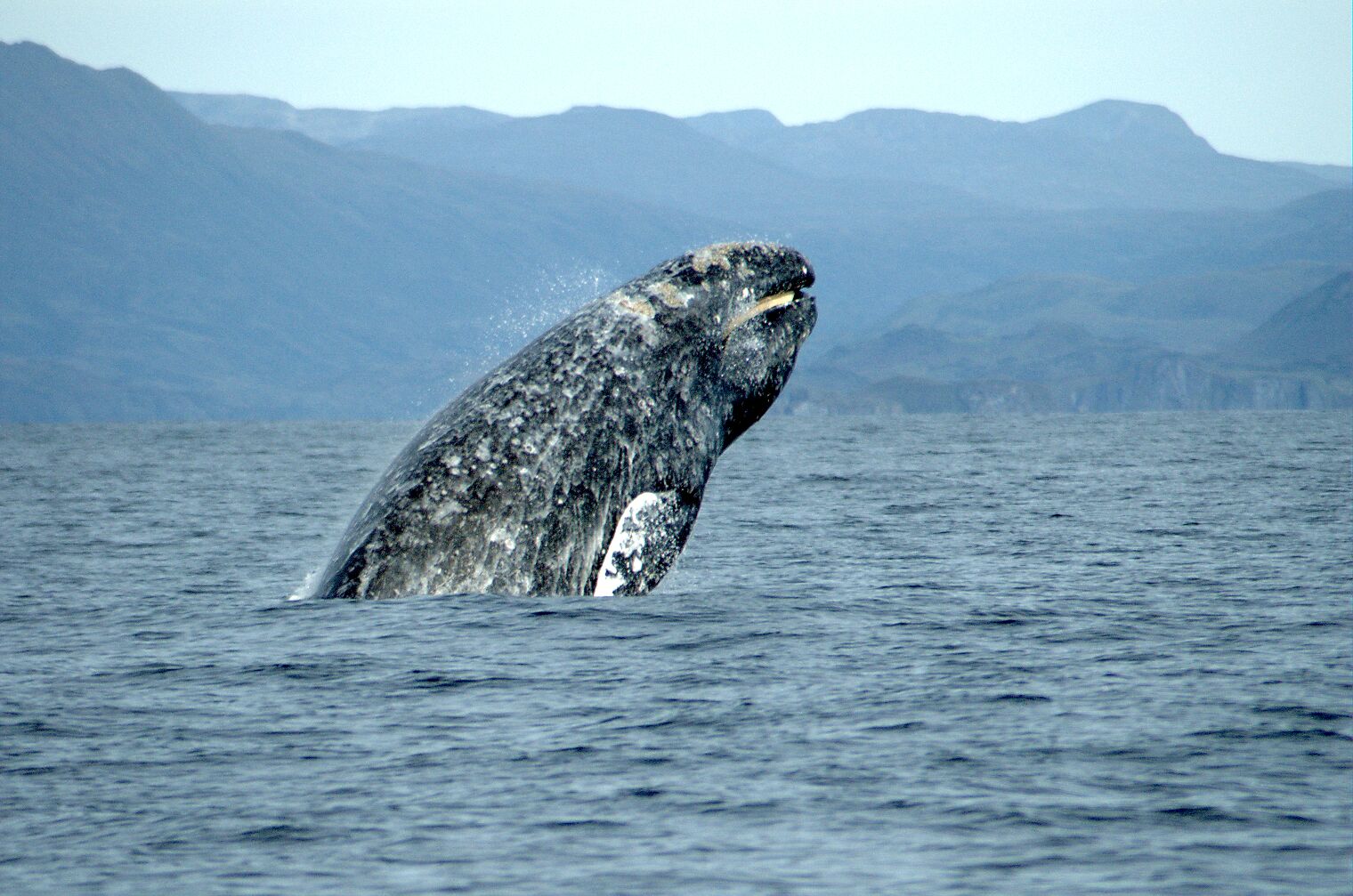
According to NOAA Fisheries, grey whales make one of the longest annual migrations of any mammal, about 10,000 miles round trip and in some cases more than 14,000. Most of the eastern North Pacific population spends the summer feeding in the northern Bering and Chukchi seas. In autumn they head south along the coast of North America to winter off Baja California, Mexico.
Calves are born on the way or in the shallow lagoons and bays of Mexico, from early January to mid-February. From mid-February to May the whales travel north again along the US West Coast, mothers and calves among them. Our sister site has a full grey whale species profile.
The coastal route has a cost. NOAA notes that it overlaps with heavy shipping and fishing, and migrating grey whales face vessel strikes and entanglement in gear.
Humpbacks and the question of why whales go to the tropics
Humpback whales follow the same basic pattern. NOAA says some migrate 5,000 miles between high-latitude summer feeding grounds and winter mating and calving areas in tropical waters. In the North Pacific, some humpbacks cover the 3,000 miles from Alaska to Hawaii in as few as 28 days. In the warmer months they feed and build up blubber to carry them through the winter.
The textbook answer is that whales feed where food is rich and breed where the water is warm. Nobody has proved why the warm water matters. A NOAA Fisheries feature on a paper in Marine Mammal Science sets out the puzzle: scientists have never agreed why whales that forage at high latitudes go to the tropics to calve. Large whales should be able to give birth in polar water, and most whales fast during their months-long migrations because there is less to eat in the tropics.
The paper’s lead author, Robert Pitman of Oregon State University’s Marine Mammal Institute, and his coauthors propose that skin is the driver. Whales feeding in freezing Antarctic water may divert blood away from their skin to save heat, which would slow the growth of new skin cells and stop normal shedding. A trip to warm water would let them molt without losing body heat.
Their evidence comes mostly from killer whales. Over eight years the team fitted 62 satellite tags and found that all four Antarctic killer whale types made trips of up to 11,000 kilometres round trip. They also photographed newborn killer whale calves in Antarctica, so these whales do not need warm water to give birth. Antarctic whales are often stained yellow by microscopic diatoms, a sign that their skin is not shedding normally.
The authors extend the idea, tentatively, to all whales that migrate to the tropics, and suggest calving there may have followed, since calves grow up with far fewer killer whales around. They call for more testing. As I read it, food explains the northern half of a humpback’s or grey whale’s year much better than anything yet explains the southern half.
Elephants in the Gourma: following water and green growth
Elephants are not famous migrants, which makes the elephants of the Gourma region of Mali, near Timbuktu, so useful. A study by Jake Wall and colleagues with Save the Elephants tracked them by GPS collar. The paper describes them as the northernmost elephant population in Africa, around 350 animals according to a 2009 count it cites.
Over a year these elephants move in a coordinated north and south pattern that the authors call relatively unique for the species. Their range is the largest recorded for African elephants, 29 percent bigger than ranges reported elsewhere. One female, Ramata, used a total area of 32,062 square kilometres. The collared elephants walked on average close to 4,000 kilometres in their first tracked year.
Water sets the rhythm. The wet season runs from early June to late September, with rain peaking in July and August. In the dry season, surface water shrinks to a few shallow lakes in the northern part of the range. Even the few that usually last all year, such as Banzena, can dry up completely. The elephants moved faster and farther in the wet season, which the authors link to the animals no longer being tied to dry season water points.
Water is not the whole story. The authors call the pattern “a complex function of availability of surface water, vegetation productivity” and possibly plant nutrients, and the elephants favoured greener areas in both seasons. Our sister blog covers the herd in Elephants in Mali: The Gourma Desert Herd, and our Elephants hub has more on the species.
Young wolves leaving home: dispersal
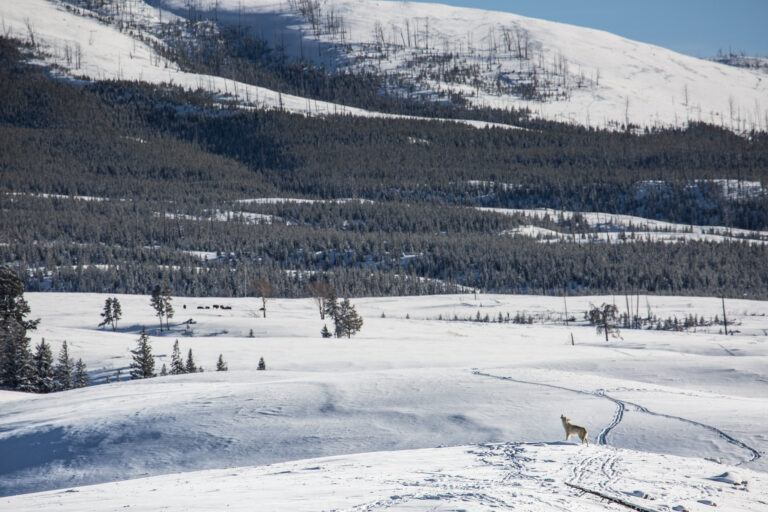
Wolves show the other kind of journey, made by young animals leaving home. The International Wolf Center uses “lone wolf” for a pack member travelling alone for a while, common in summer, or for a wolf that has dispersed from the pack it was born into.
The proposed reasons for leaving include competition for mates, avoiding inbreeding, and competition for food. A 2003 article by Steven Fritts and colleagues, quoted by the Center, says dispersal helps a wolf find “a wolf-pack-free area, food resources, and a suitable mate.” A study by Eric Gese and L. David Mech followed 316 radio-collared wolves in northeastern Minnesota between 1969 and 1989. Of these, 75 dispersed, most as yearlings, travelling between 5 and 220 miles. A wolf known as V075, collared by the Voyageurs Wolf Project, covered 2,960 kilometres in about 15 months.
What pushes a young wolf out seems to vary by place. Gese and Mech found more dispersal in packs with many young wolves, and on Isle Royale, Rolf Peterson and others saw more wolves leave when prey declined. A genetic study in Idaho points the other way on food. As The Wildlife Society reports, Kat Petersen and colleagues analysed samples from hundreds of wolves hunted between 2017 and 2023. Young wolves were more likely to leave when prey was plentiful and fewer wolves lived nearby, and hunting pressure made little difference. Dispersers moved an average of 81.8 kilometres. Petersen speculates that well-fed wolves are better prepared for a long solo trip.
Our sister blog’s piece on how wild wolf packs actually work covers what happens when a disperser finds a partner and starts a pack of its own.
What drives each journey
Side by side, the drivers sort out fairly cleanly. Whales migrate between a place that is good for eating and a place that is good for something else, with calving the traditional answer and skin a newer one still being tested. The Gourma elephants follow water in the dry season and green growth in the wet. Young wolves disperse to find a mate and a territory, and the trigger depends on local food and how crowded the neighbourhood is.
The two kinds of movement also break in different ways. A migration needs a whole route to stay open, and the Mali study warns that such systems often hinge on a few small bottlenecks, such as La Porte des Éléphants, a valley about 1.6 kilometres wide through sandstone hills. Dispersal needs young animals to be able to cross the gaps between populations. That is why wildlife conservation has to think about corridors and coastlines as well as protected areas.
Have you watched a migration or seen a young animal setting out on its own? Tell us what you saw in the comments.
Sources
- NOAA Fisheries: Gray Whale
- NOAA Fisheries: Humpback Whale
- NOAA Fisheries: Why Do Whales Migrate? They Return to the Tropics to Shed Their Skin, Scientists Say
- Wall et al. (2013), Characterizing properties and drivers of long distance movements by elephants in the Gourma, Mali. Biological Conservation 157 (via Save the Elephants)
- International Wolf Center: What’s a lone wolf? And why do wolves disperse?
- The Wildlife Society: Young wolves disperse more when well fed
Photo: Merrill Gosho, NOAA, Public domain, via commons.wikimedia.org.