
Whales
A clear introduction to whales: baleen and toothed groups, how they live and migrate, and how they are recovering after the whaling era.

Whales are the largest animals that have ever lived on Earth, larger than any dinosaur, and yet they spend their lives in a world we rarely see. Most people will only ever glimpse a back arching at the surface or hear a recording of their long, complex songs. That distance is part of the fascination. Whales are vast, intelligent, deeply social mammals, and they breathe air just as we do, which gives every encounter at the surface a strange sense of recognition.
This page is a broad introduction to whales as a group: what they are, the main types, how they live and how they are recovering from a difficult century. It is an overview rather than a complete guide. The detailed species coverage, the migration trackers and the closer features live with our dedicated team at lovewhales.org, who write about whales and little else. Treat this page as the map and that blog as the territory.
The whale at a glance
Whales are marine mammals belonging to a group called cetaceans, which they share with dolphins and porpoises. They are warm blooded, they breathe air through blowholes, and they nurse their young with milk. Everything else about them, from their size to their songs, follows from a body fully committed to ocean life.
- Size: spans an enormous range, from porpoises around 1.5 metres to the blue whale, which can reach roughly 30 metres and is the largest animal known to have existed.
- Range: every ocean on Earth, with many species making long seasonal migrations between feeding and breeding grounds.
- Diet: split by group. Baleen whales filter feed on tiny krill and small fish, while toothed whales hunt fish, squid and, in some cases, larger prey.
- Lifespan: long for most species, often several decades, and the bowhead whale is believed to be among the longest lived mammals of all.
- Communication: highly developed, including the elaborate songs of humpbacks and the click based echolocation used by toothed whales.
- Conservation: a mixed picture. Several great whales have recovered since commercial whaling ended, while others remain endangered.
The two great groups of whale
The clearest way to make sense of whales is to split them into two groups, because the difference shapes almost everything about how they live.
The first group is the baleen whales. Instead of teeth they have plates of baleen, a tough, comb like material that hangs from the upper jaw and strains food from the water. These are the giants: the blue whale, the fin whale, the humpback, the gray whale and the bowhead. They feed by taking in vast mouthfuls of water and pushing it back out through the baleen, leaving krill and small fish behind. It is a strategy that lets the biggest animals on the planet live on some of the smallest prey.
The second group is the toothed whales, which keep their teeth and hunt active prey. This group is large and varied and includes the sperm whale, the deepest diving of all whales, the narwhal with its long spiral tusk, beluga whales and the orca, often called the killer whale. The toothed whales also include the dolphins and porpoises, which are simply small members of the same group. Because dolphins are such a large and distinctive part of that story, we give them their own dolphins hub page. For the full spread of whale species and how they compare, the profiles at lovewhales.org go much further than this page can.
Where whales live and how they behave
Whales are found in every ocean, but most do not stay still. Many of the great whales follow some of the longest migrations of any animal, moving between cold, food rich polar waters where they feed in summer and warmer waters where they breed and give birth. The gray whale and the humpback are famous for these journeys, which can run for thousands of kilometres each way.
Socially, whales are far from solitary giants. Many live in stable groups, and toothed whales such as orcas form tight family units that pass behaviour and even local dialects down through generations. Their communication is rich. Humpback songs are long, structured sequences that change over time and spread between populations. Sperm whales use patterned clicks. This combination of intelligence, long life and strong social bonds is one reason whales feel so compelling, and one reason their losses during the whaling era cut so deep. Their migrations also place them within a wider story explored on our animal migration pillar.
Are whales endangered?
The honest answer is that it depends on the species, and the story has two halves. For much of the nineteenth and twentieth centuries, commercial whaling devastated the great whales. Industrial fleets killed enormous numbers, and several species were pushed to a small fraction of their former populations. The blue whale, the largest animal ever to live, was hunted to the edge.
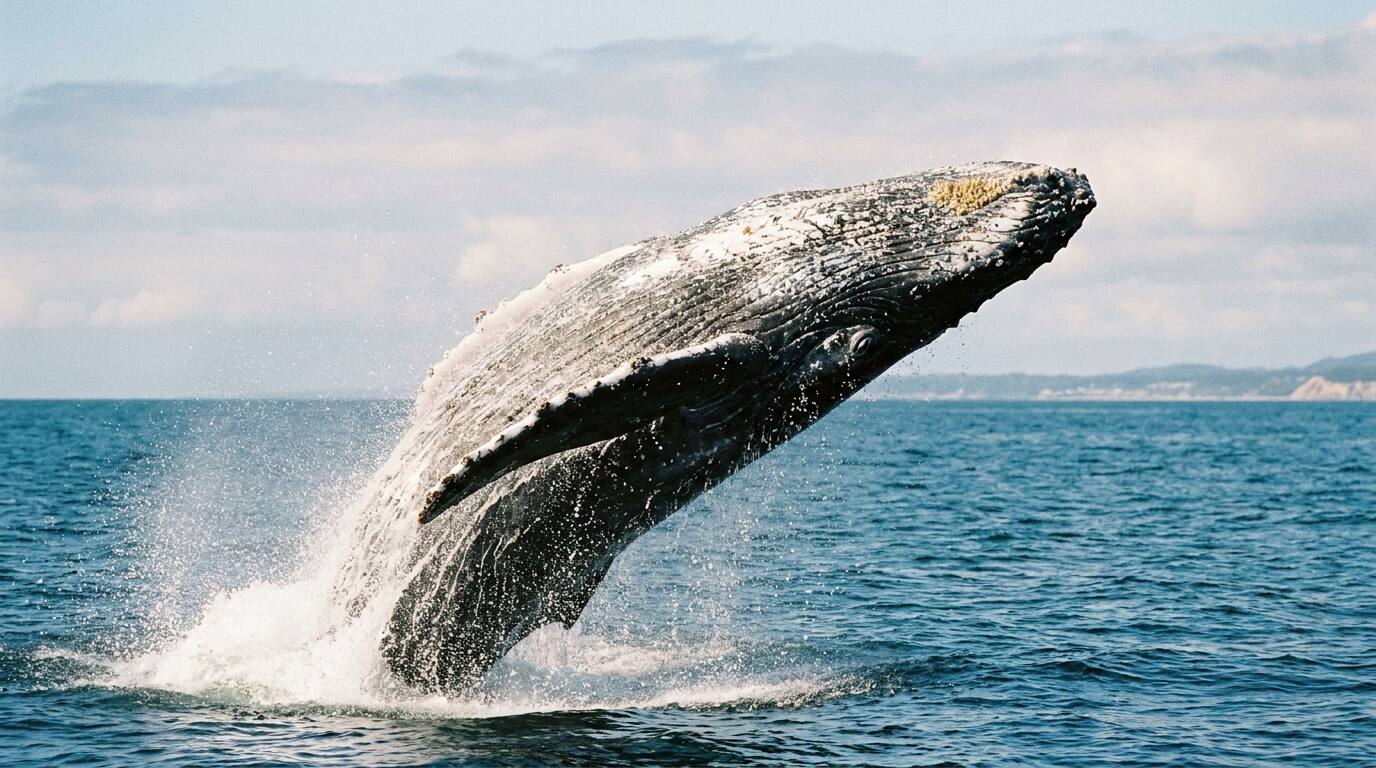
The turning point came in 1986, when the International Whaling Commission introduced a moratorium on commercial whaling. In the decades since, several great whales have shown real recovery. Humpback populations in many regions have rebounded strongly, and some are no longer considered globally threatened. This is one of conservation’s genuine success stories, and it shows what is possible when a clear threat is removed.
The recovery of the humpback whale is a reminder that decline is not always permanent. Remove the pressure, give a slow breeding animal time, and populations can climb back.
The picture is not uniformly bright. Some whales remain endangered, and the North Atlantic right whale is a stark example, with a very small population still under threat. The threats today are different from the harpoon. Collisions with ships, entanglement in fishing gear, underwater noise pollution, plastic and chemical pollution, and the long reach of climate change on the prey whales depend on all weigh on them. Conservation bodies including the IUCN, WWF and national agencies such as NOAA continue to monitor populations and push for shipping and fishing measures that reduce these risks.
Where to go next
If whales have drawn you in, the place to go deeper is lovewhales.org, our specialist blog devoted entirely to them. It carries species profiles, migration features, whale watching guidance and conservation reporting in far more depth than a hub page allows.
Whales sit within wider stories on this site too. They share the open ocean with the great filter feeders and giant hunters covered on our ocean giants pillar. Their smaller toothed relatives have their own home on our dolphins hub page. And because so many whale species are still recovering or remain at risk, they belong in the broader picture on our endangered animals pillar.
Common questions about whales
What is the biggest whale?
The blue whale, which can reach around 30 metres in length. It is not only the largest whale but the largest animal known to have ever lived, heavier than any dinosaur. Remarkably, it feeds almost entirely on krill, one of the ocean’s smallest creatures.
Are whales fish or mammals?
Whales are mammals. They are warm blooded, they breathe air at the surface through blowholes, and they give birth to live young that they nurse with milk. Their ancestors lived on land and returned to the sea over millions of years.
Why do whales sing?
Whale song is best documented in humpbacks, where long, structured sequences are produced mainly by males and are thought to play a role in breeding. Toothed whales rely more on clicks and calls for communication and echolocation. Sound travels far in water, so it is a natural way for whales to stay in contact.
How far do whales migrate?
Many great whales make some of the longest migrations of any animal, travelling thousands of kilometres between cold feeding grounds and warmer breeding areas. The gray whale’s annual journey along the Pacific coast is one of the best known examples.
Are whales still hunted today?
Large scale commercial whaling ended after the 1986 international moratorium, and most whaling has stopped. Limited hunting still takes place under specific exceptions in a small number of countries, but it is far removed from the industrial scale of the past. The main threats now come from ship strikes, fishing gear and pollution.
Shop the Love Whales collection
Our sister site runs a dedicated whale shop: books, apparel and gifts chosen for whale lovers. Browsing it helps support the our conservation writing.
Visit the whale shopLatest from Love Whales
How Baleen Whales Feed: Gulps, Skims and Bubble Nets
Baleen whales have no teeth. They use keratin plates as a sieve, and each species has its own way to fill it. The post How Baleen Whales Feed: Gulps, Skims and Bubble...
Read on Love WhalesWhat Whale Blubber Does: Warmth, Food and Float
Blubber keeps a whale warm, feeds it through long fasts and helps it float. Here is how each job works, and why thickness is not the whole story. The post What Whale...
Read on Love WhalesWhere to See Right Whales in Florida: Beaches, Season, Rules
Right whales calve off Florida's northeast coast each winter, close enough to watch from the beach. Where they have been seen, when to look and who to call. The post Where to...
Read on Love WhalesHow Whale Calves Nurse Underwater, and What Is in the Milk
Whales have no nipples. Here is how a calf drinks underwater, why the milk is so fatty, and what nursing costs a mother. The post How Whale Calves Nurse Underwater, and What...
Read on Love WhalesHow Scientists Work Out a Whale’s Age
Harpoon tips, earwax layers and eye chemistry explain how scientists know bowheads can pass 200 years, and where the evidence is thin. The post How Scientists Work Out a Whale’s Age appeared...
Read on Love WhalesHow Whales Breathe: Blowholes, Blows and Deep Dives
Where a whale's blowhole sits, what the blow really is, and what tags and drones show about how often whales breathe. The post How Whales Breathe: Blowholes, Blows and Deep Dives appeared...
Read on Love Whales