
Endangered Animals
How the IUCN Red List works, which animals are genuinely threatened across our blogs, the recoveries that show it can work, and what readers can do.

The phrase “endangered animals” gets used loosely, often to mean any creature that is rare or in trouble. In practice it has a precise meaning. There is a global system, run by the International Union for Conservation of Nature (the IUCN), that sorts the world’s species into categories of extinction risk. Knowing how that system works changes how you read every wildlife headline you will ever see, because it tells you whether a population is genuinely on the edge or simply less common than it used to be.
This page is a plain guide to that system and to how the animals across our blogs actually stand within it. Some of the creatures people assume are doing fine are quietly slipping. Some that people assume are doomed have, against the odds, started to recover. The picture is genuinely mixed, and the honest version is more interesting than the gloomy one.
We will keep the numbers qualitative where the science is uncertain, because extinction risk is assessed at the level of the whole species or a distinct population, and those assessments are revised as new survey data comes in. What matters is the direction of travel and the reasons behind it. Throughout, we link to the specialist coverage on our partner blogs, where individual species are followed in far more detail than a single overview page can manage.
How the IUCN Red List actually works
The IUCN Red List is the closest thing the world has to a shared scorecard for extinction risk. It does not rank animals by how charismatic or well loved they are. It places each assessed species into one of several categories based on measurable criteria: how fast the population is shrinking, how small it has become, how restricted its range is, and how fragmented the survivors are.
- Least Concern. Widespread and abundant. Most common animals sit here, and that is good news, not a sign the list is broken.
- Near Threatened. Not in trouble yet, but close enough that the trend is worth watching.
- Vulnerable. Facing a high risk of extinction in the wild. This is the first of the three “threatened” categories.
- Endangered. A very high risk of extinction in the wild.
- Critically Endangered. An extremely high risk of extinction in the wild. The last rung before the species is gone.
- Extinct in the Wild and Extinct. The species survives only in captivity, or no longer survives at all.
- Data Deficient. Not enough information exists to judge risk. This category matters more than people think, because a great many ocean species sit here simply because nobody has surveyed them properly.
When people say an animal is “endangered” in casual speech, they usually mean it falls somewhere in the Vulnerable to Critically Endangered band. Strictly, Endangered is one specific rung. We will use the casual sense where it reads naturally and the strict sense where precision matters, and we will say which is which.
One more point that is easy to miss: a category describes risk, not headcount. A species can number in the thousands and still be Critically Endangered if its population is collapsing fast or its range is tiny and shrinking. Equally, a species can be rare and stable and sit in a lower category. The trend and the threats drive the rating.
Elephants: when one species splits into two
Elephants are the clearest example of why the details matter. For a long time the African elephant was treated as a single species. In 2021 the IUCN assessed Africa’s two elephant types separately, and the result was sobering. The African forest elephant, the smaller, darker animal of the Congo Basin rainforest, was listed as Critically Endangered. The African savanna elephant, the larger and more familiar grassland animal, was listed as Endangered.
The split mattered because forest elephants had been hidden inside the average. They reproduce slowly, they are hard to count under a dense canopy, and they were hit hard by ivory poaching across decades. Pulling them out of the combined figure revealed a decline that the broader number had softened. The Asian elephant, a separate species again, is also Endangered, squeezed mostly by habitat loss and conflict with people rather than by ivory.
If you want the long version, our elephants hub page walks through the species and their ranges, and the team at loveelephants.org follows elephant conservation news closely, including the practical work of protecting forest corridors. Elephants are also a useful lesson for the whole list: taxonomy is not trivia. How you draw the species line decides which animals get counted as in trouble.
Sharks: the quiet crisis in open water
Sharks are the animals most often misjudged. Decades of fear have made people assume sharks are a threat to us. The reverse is closer to the truth. A large share of shark and ray species are now classed as threatened, and the open-ocean sharks have fared especially badly. Species that roam the high seas, far from any country’s coastal protection, have declined sharply, driven by fishing, both as targeted catch and as bycatch tangled in gear set for other fish.
Sharks are biologically slow to bounce back. Many grow slowly, mature late, and produce few young. A fish that takes years to reach breeding age and then has a small litter cannot replace heavy losses quickly. That combination is why shark populations can crash fast and recover slowly, the opposite of a fast-breeding fish.
The Data Deficient problem bites hardest here. A meaningful number of shark and ray species simply have not been assessed with confidence, because deep water and remote ranges make surveys expensive. “We do not know” is not the same as “they are fine”. Our sharks hub page sets out the picture across the group, and welovesharks.org covers individual species and the fishing-policy debates in depth. Sharks also sit at the centre of our apex predators pillar, because losing top predators reshapes the food web beneath them.
Wolves: the red wolf on the edge
Wolves show how two populations of broadly similar animals can sit at opposite ends of the list. The grey wolf, taken as a global species, is listed as Least Concern, because it remains widespread across the northern hemisphere even though it has been wiped out of large parts of its former range. That global rating hides regional drama: some national and local populations are tiny, legally fragile, and contested.
The red wolf is the sharper warning. Native to the southeastern United States, it is one of the most endangered wild canids on Earth, listed as Critically Endangered, with only a small wild population surviving in a restricted area of North Carolina. Its troubles are a tangle of historical persecution, habitat loss, and crossbreeding with coyotes that blurs the genetic line of the species itself. Captive breeding has kept the red wolf from disappearing entirely, but a self-sustaining wild population is still a long way off.
The wolf story is not all bleak. The grey wolf’s return to parts of Europe and to the northern Rockies is one of conservation’s genuine recoveries, which is why wolves appear again on our wildlife conservation pillar as a rewilding success. For the full account of wolf species, ecology and the politics that surrounds them, see our wolves hub page and the ongoing coverage at welovewolves.org.
Whales and dolphins: a tale of two outcomes
The great whales are conservation’s most cited comeback. Industrial whaling in the nineteenth and twentieth centuries pushed several species to the brink. After commercial whaling was largely halted, some populations began a slow climb back. Humpback whales are the headline case: many humpback populations have recovered strongly enough that the species overall is now assessed as Least Concern, though certain distinct populations are still considered at risk and are treated separately.
Recovery is not universal. The North Atlantic right whale remains Critically Endangered, with a very small population and a stubborn problem: the animals are killed by ship strikes and by entanglement in fishing rope, and they breed slowly. The blue whale, the largest animal that has ever lived, is still listed as Endangered, far below its pre-whaling abundance even though the killing has stopped.
Dolphins, which are small whales in the biological sense, carry the most extreme case of all. The vaquita, a small porpoise found only in the northern Gulf of California, is Critically Endangered and is widely considered the most endangered marine mammal in the world. Only a tiny number survive, and the cause is brutally specific: they drown in gillnets set illegally for another fish whose swim bladder fetches a high price. The vaquita is a reminder that an animal can be doomed not by malice toward it, but as collateral damage in someone else’s trade.
For the wider story of these animals, our whales hub page and dolphins hub page cover the groups in full, with deeper species coverage at lovewhales.org and welovedolphins.org. The largest whales also feature on our ocean giants pillar.
Bears: living with a changing landscape
Bears span almost the entire length of the Red List, which makes them a useful tour of how risk works. Of the world’s eight bear species, several are listed as Vulnerable, including the polar bear, the giant panda, the sloth bear, and the sun bear. One, the brown bear, is Least Concern as a global species despite being lost from much of its old range. And one, as we cover below, has become conservation’s signature success story.
The polar bear is the species most tightly bound to climate. Polar bears hunt seals from sea ice, and as the Arctic warms and that ice forms later and breaks up earlier, the bears lose hunting time. They are listed as Vulnerable, and the central concern is not poaching but the long-term loss of the frozen platform their way of life depends on. It is a slower threat than a gillnet or a poacher’s rifle, and harder to fix, because it traces back to the global climate rather than to any single park or border.
Our bears hub page introduces all eight species and where they stand, and lovebears.org follows bear conservation in detail, from Arctic sea-ice science to the recovery of forest bears in Asia and the Americas.
Pandas: proof that the list can move the right way
It is easy to read a page like this and conclude that every animal is sliding toward extinction. The giant panda says otherwise. In 2016 the IUCN downlisted the giant panda from Endangered to Vulnerable, a formal recognition that decades of work had improved its outlook. The change followed sustained protection of bamboo forest, an expanding network of reserves in China, a crackdown on poaching, and a captive-breeding programme that eventually fed animals back toward the wild.
The panda’s downlisting deserves to be read carefully, not waved around as a finished victory. Vulnerable still means a species at real risk, the panda’s habitat remains fragmented into separate forest patches, and a warming climate threatens the bamboo it depends on. But the direction reversed, and that is the point. A category can move down the risk scale as well as up it, and when it does it is evidence that focused, well-funded, long-term effort works.
Our pandas hub page tells the recovery story in full, and welovepandas.org follows panda reserves and breeding news as it develops. The panda also anchors the success-story section of our wildlife conservation pillar.
What readers can actually do
It is reasonable to finish a page like this feeling that the problem is too big for one person. Most of the levers that matter are policy levers, fishing rules, protected-area funding, habitat law. But individual choices are not nothing, and a few of them are genuinely worth making.
- Support established conservation organisations with a track record, rather than reacting to whichever crisis is loudest this week. Steady funding is what keeps reserves staffed and surveys running.
- Be a careful consumer of seafood. Bycatch in poorly managed fisheries is a leading threat to sharks, to the vaquita, and to many seabirds. Choosing better-managed sources sends a small but real signal.
- Refuse wildlife products. Ivory, shark-fin, and similar items keep illegal trades alive. The simplest rule is to never buy them and to discourage others quietly when the subject comes up.
- Share accurate information. A lot of harm to sharks in particular comes from fear built on bad information. Correcting a myth at the right moment is a free contribution.
- If you travel to see wildlife, choose operators that keep a respectful distance and put money back into local conservation and communities.
The honest summary
The Red List is not a doomsday clock. It is a working document that records, species by species, where extinction risk actually sits, and it moves in both directions. Forest elephants, red wolves, North Atlantic right whales and the vaquita are in genuine danger, and pretending otherwise helps no one. At the same time, humpback whales have climbed back, grey wolves have returned to old ground, and the giant panda has been formally downlisted. Those are not flukes. They are the result of decades of work.
The thread that connects every animal on this page is that risk is a measured thing, not a vibe, and that effort changes the measurement. To follow any of these species more closely, start with the relevant hub page, then move to the specialist blog that covers it day to day.
Common questions about endangered animals
What is the difference between Endangered and Critically Endangered?
Both are “threatened” categories on the IUCN Red List, but Critically Endangered is the higher risk. Endangered means a very high risk of extinction in the wild. Critically Endangered means an extremely high risk, the last category before a species is gone from the wild. The rating depends on how fast a population is declining, how small it has become, and how restricted and fragmented it is.
Which animal across our blogs is closest to extinction?
The vaquita, a small porpoise from the northern Gulf of California, is the most precarious. It is Critically Endangered, only a tiny number survive, and the main threat is drowning in illegal gillnets. The African forest elephant and the red wolf are also Critically Endangered and face very serious pressure.
Can an animal ever move off the endangered list?
Yes. The giant panda was downlisted from Endangered to Vulnerable in 2016 after decades of habitat protection and breeding work, and several humpback whale populations have recovered strongly since commercial whaling was halted. Categories move in both directions, which is exactly why the Red List is a useful tool rather than a one-way alarm.
Why are so many sharks threatened when shark attacks are rare?
Sharks are far more endangered by people than people are by sharks. Many sharks grow slowly, mature late, and have few young, so they cannot replace heavy fishing losses quickly. They are caught both deliberately and as bycatch in gear set for other fish. Open-ocean sharks, beyond the reach of coastal protection, have declined especially sharply.
Does “Data Deficient” mean an animal is safe?
No. Data Deficient simply means there is not enough information to judge the species’ risk. It is a gap in knowledge, not a clean bill of health. Many deep-sea and open-ocean species sit in this category because surveying them is difficult and expensive, and some of them may turn out to be threatened once they are properly assessed.
Latest from our blogs

How Wolves Move in Snow: Feet, Footload and Snowfall
Wolves spread their toes on snow, but a study of collared wolves in Alberta found falling snow slowed packs more than deep snow did. The post How Wolves Move in Snow: Feet,...
Read on We Love Wolves
Red Panda Cubs: Birth, Den Life and Weaning Explained
How a red panda cub grows from a 100 gram newborn in a tree den to a young adult, with the timing from two zoos and a recent genetics study. The post...
Read on We Love Pandas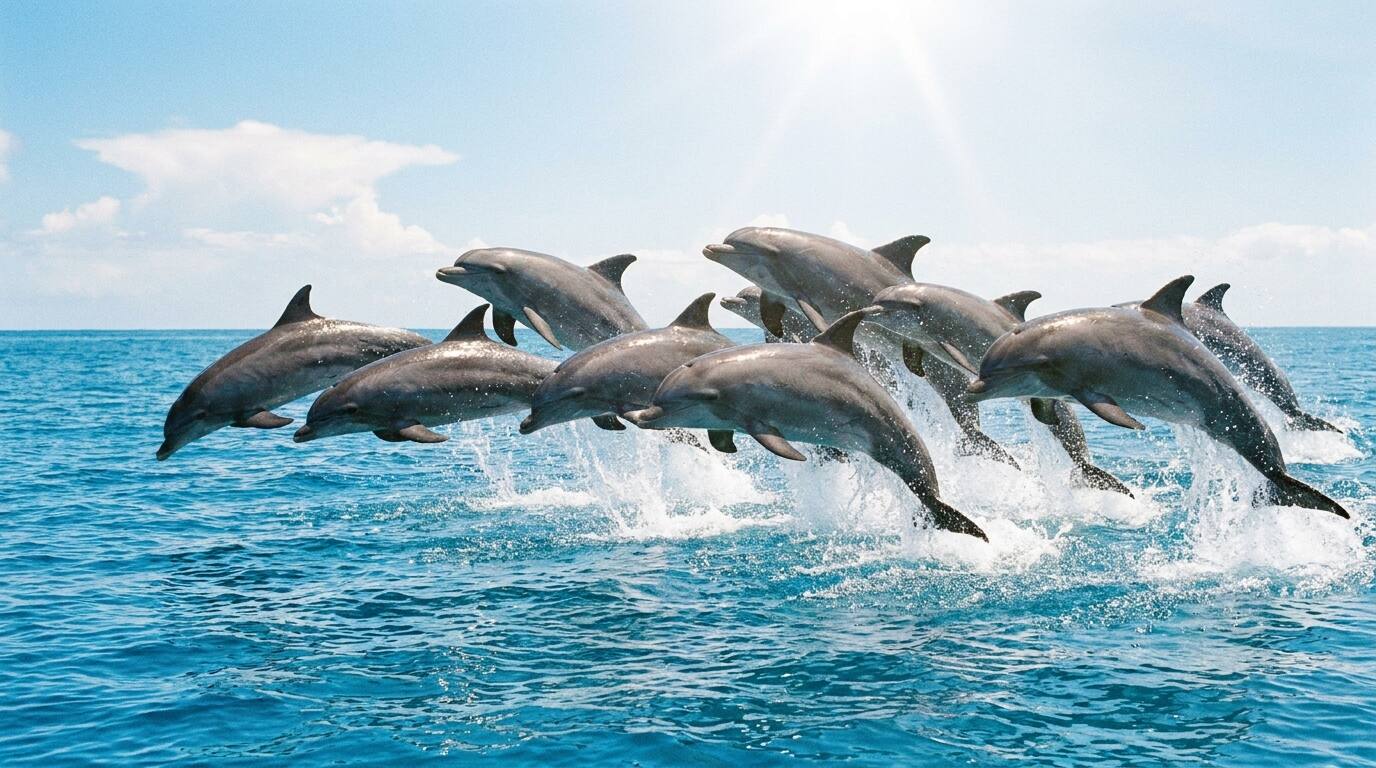
Dolphin Senses: Taste, Smell and Electric Sense Explained
Dolphins have lost smell and most of their taste, yet they can recognise a friend by urine and sense weak electric fields. Here is what scientists found. The post Dolphin Senses: Taste,...
Read on We Love Dolphins
Epaulette Shark: The Reef Shark That Walks and Shrugs Off Low Oxygen
The epaulette shark walks on its fins and survives night-time oxygen crashes in Great Barrier Reef tide pools. Here is what studies found, and what it does not. The post Epaulette Shark:...
Read on We Love Sharks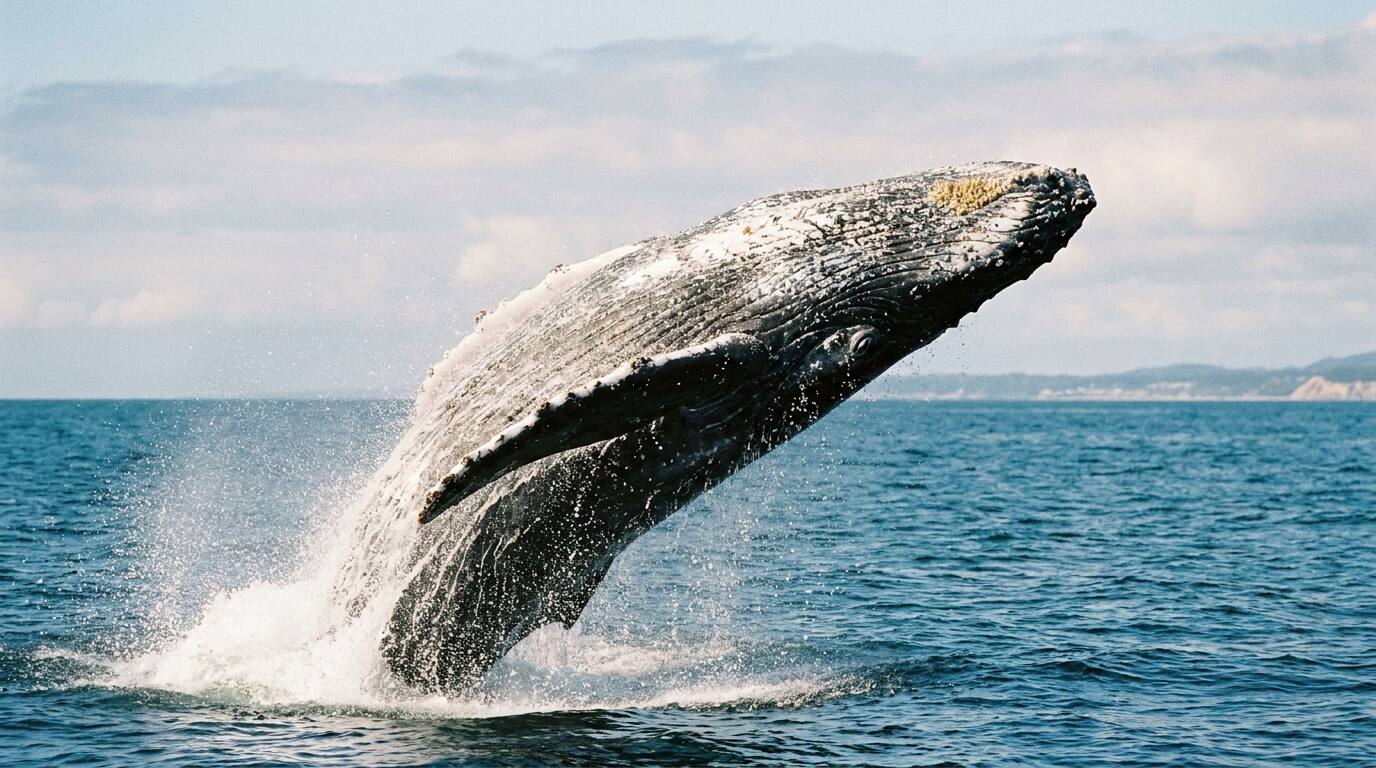
How Baleen Whales Feed: Gulps, Skims and Bubble Nets
Baleen whales have no teeth. They use keratin plates as a sieve, and each species has its own way to fill it. The post How Baleen Whales Feed: Gulps, Skims and Bubble...
Read on Love Whales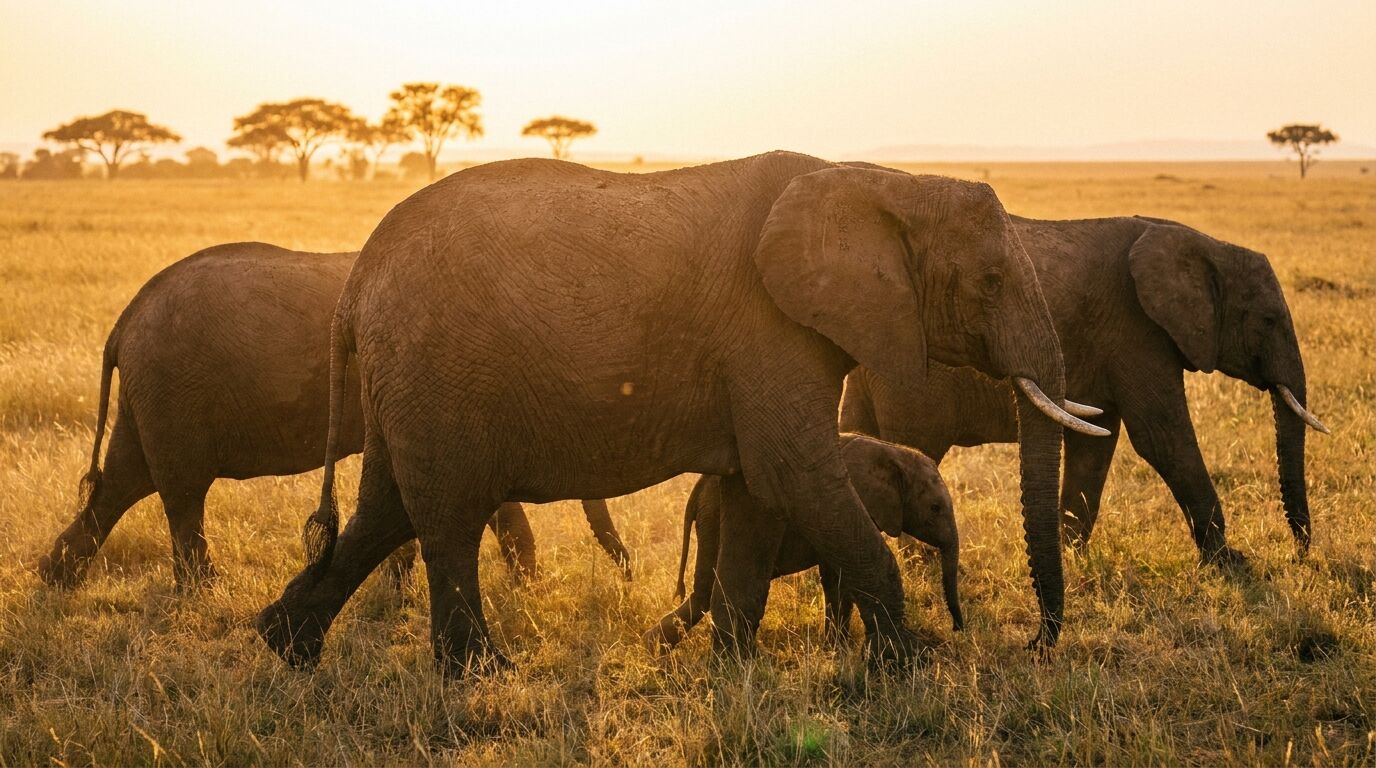
Can Elephants Run? What Gait Measurements Show
Elephants never leave the ground at once, yet they bounce on springy legs at speed. Here is what the measurements say about their gait and top pace. The post Can Elephants Run?...
Read on Love Elephants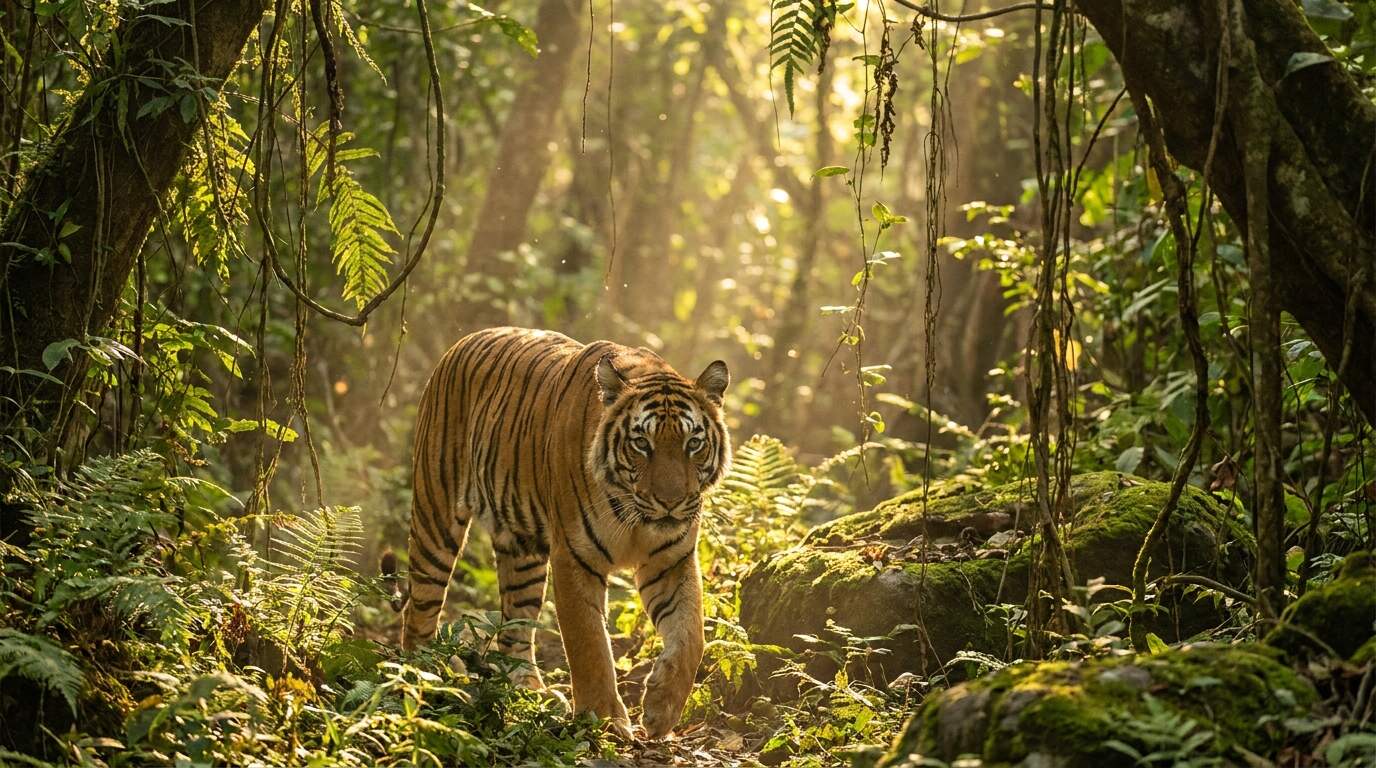
How Tigers Mate: Oestrus, Courtship and Timing
A tigress is receptive for only a few days at a time. Here is how tigers signal, court, mate and time a litter. The post How Tigers Mate: Oestrus, Courtship and Timing...
Read on We Love Tigers
Bear Tracks: How to Read Black Bear and Grizzly Prints
How to read a bear track: five toes, front and rear print sizes, the toe line and claw marks, and what a print cannot tell you. The post Bear Tracks: How to...
Read on Love BearsView all posts
Every recent article from all eight We Love Wildlife blogs in one live feed.
See every post