Keystone Species Explained: What the Evidence Shows
Robert T. Paine, an ecologist at the University of Washington, removed ochre sea stars from a stretch of rocky shore on Tatoosh Island in Washington State. Without the sea stars, mussels took over. They crowded out the algae that fed snails, limpets and bivalves, and the shore’s biodiversity was cut in half within a year, according to National Geographic’s summary of his work.
Paine called the sea star a keystone, after the stone at the top of an arch that holds the others in place. Today wolves, sea otters, elephants and sharks all get the label. Some of those cases are strong, some are weaker than the popular version, and ecologists still argue about what the word should mean.
What Paine meant by keystone
Paine’s own definition, as quoted in a 2003 review by Robert Davic, was narrow. He described a species of high trophic status whose activities exert a disproportionate influence on the pattern of species diversity in a community.
The important word is disproportionate. A keystone matters far more than its numbers or weight would suggest. National Geographic adds a second test. A keystone has low functional redundancy, so if it disappears, nothing else steps into its role.
Sea otters, urchins and kelp
According to a USGS profile of the biologist Jim Estes, the best known marine example began when Paine visited Amchitka Island in the Aleutians, where Estes was studying sea otters, and asked whether he had thought about how otters affect the ecosystem rather than the other way round.
The Aleutians made a natural experiment. Sea otters had been hunted to near extinction during the maritime fur trade of the mid to late 1800s, protected in the early 1900s, and by the 1970s they had come back to some islands but not others. At Attu Island, which had no otters, Estes found urchins covering the sea floor and little kelp. Islands with otters had plenty of kelp.
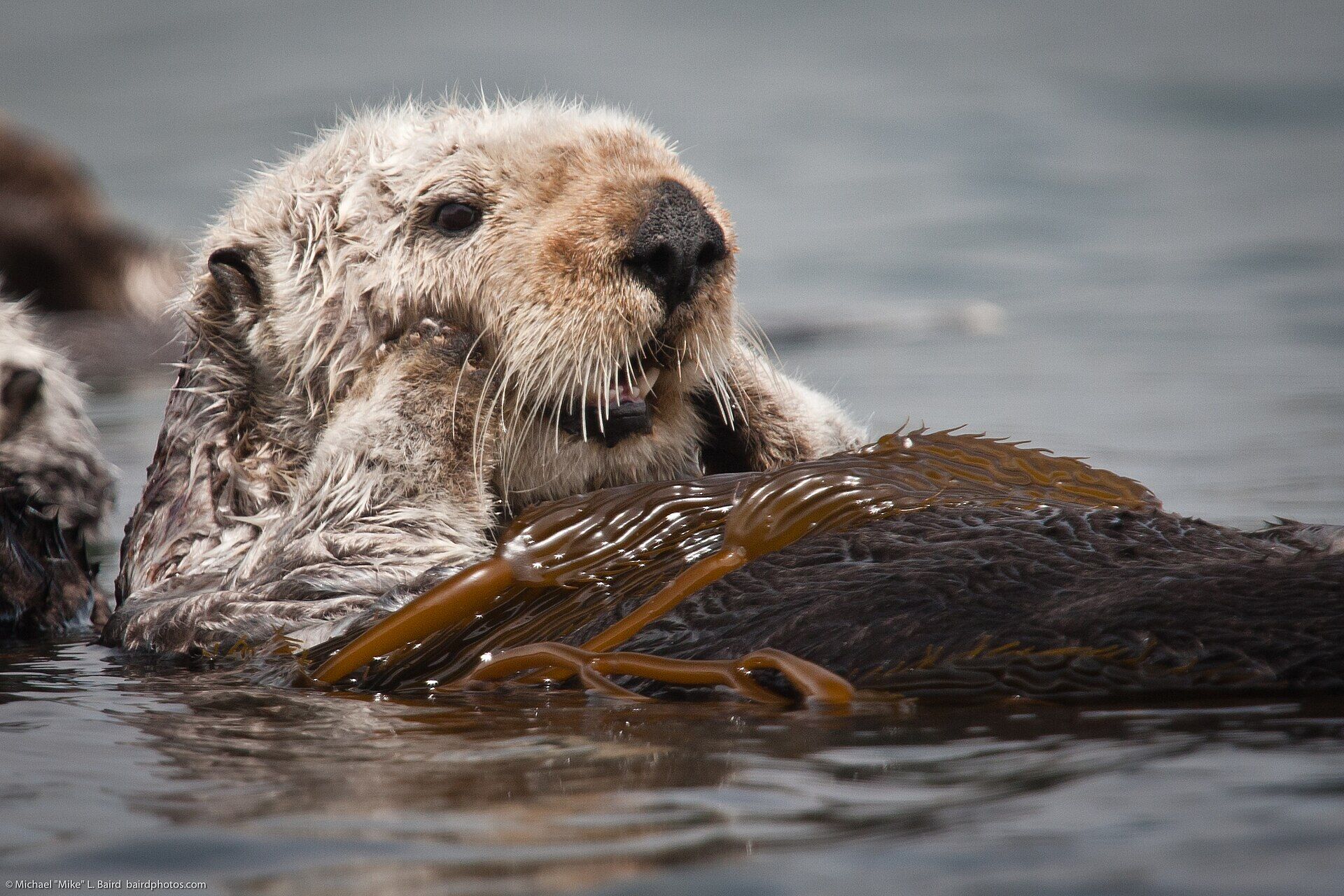
In a 1974 paper, Estes and John Palmisano proposed that otters were the main cause of the difference. Otters eat urchins, urchins eat kelp, so otters let the kelp forest stand. They described the sea otter as “an evolutionary component essential to the integrity and stability of the ecosystem.” Later work found otters affecting the diets of gulls and bald eagles and the size of local fish populations.
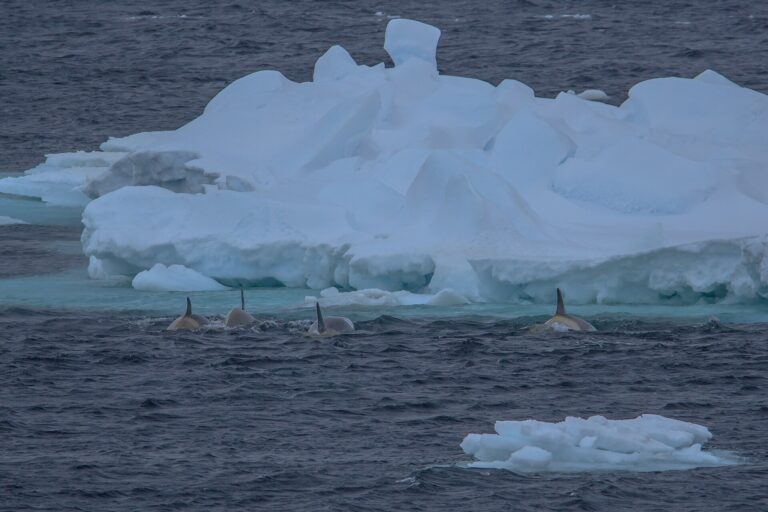
A keystone can itself be knocked out. In the early 1990s, Estes and his colleague Tim Tinker saw that many thriving Aleutian otter populations had collapsed. Estes and colleagues concluded that killer whales were eating the otters, and that the whales’ hunting had shifted after commercial whaling cut the great whale populations of the northern Pacific. Orcas turn up again on our Apex Predators page.
The otter effect also varies from place to place. A 2025 study in PNAS compared two 30-year datasets from coasts where otters were reintroduced. Off Vancouver Island, the arrival of otters quickly led to fewer urchins and the recovery of kelp. Around San Nicolas Island in California, the cascade was muted. Otters, urchins and kelp all lived side by side at middling densities for years. The authors link part of the difference to competition among other species, which buffered the otters’ effect.
Wolves in Yellowstone: a textbook case, revisited
The last wolves officially killed in Yellowstone were two pups killed by park rangers in 1926. Wolves were brought back between 1995 and 1997. The hypothesis that followed was that wolves killed or scared off enough elk that young aspen and willow could grow again after decades of heavy browsing.
Early results looked dramatic. Ripple and Beschta resurveyed 97 aspen stands along four streams in the Lamar River catchment in 2010. Browsing on the five tallest young aspen in each stand had dropped since 1998, when every measured leader had been browsed. They also wrote that northern Yellowstone “still appears to be in the early stages of ecosystem recovery.”
The method came under scrutiny. Elaine Brice, Eric Larsen and Dan MacNulty measured young aspen in 113 randomly placed plots and published the comparison in Ecology Letters. Sampling only the tallest young plants overestimated aspen regeneration by a factor of four to seven compared with random sampling. Random sampling still showed a trophic cascade, but a weaker one.
The reason is partly about elk anatomy. Elk prefer to browse at about shoulder height, which the study put at 122 to 132 cm, so they do not have to crane their necks. A sapling that is already taller than that is less likely to be eaten whatever the wolves are doing. Tall saplings also grow where sunlight, moisture and soil are best, as a Utah State University write-up explains. Brice compared the old method to “calculating a team’s batting average without the player who always strikes out.”
So the wolf effect looks real, and smaller than the version that went round the world. Yellowstone elk also face cougars, grizzly bears and black bears, which makes the wolves’ share harder to separate. We Love Wolves has more on why wolves matter to their ecosystems, and our Wolves hub links the rest.
Elephants: keystone or engineer?
National Geographic describes elephants as a keystone in savannas such as the Serengeti, where they knock over and uproot acacia trees even after the trees pass a metre in height, which keeps the land open grassland rather than woodland.
A chapter on Botswana’s Chobe woodlands by du Toit, Moe and Skarpe notes that, depending on place and context, the African elephant has been classed as a keystone species, an ecosystem engineer, or both. Both labels come from the habit of breaking, felling and uprooting trees, which, with fire or other browsers, can transform a savanna. The chapter adds that elephants dominate the mix of large herbivores in savannas with higher rainfall, poorer soils, or both.
What happens when elephant numbers stay high for a long time? A study in Hwange National Park, Zimbabwe, followed 12 vegetation plots for more than 15 years at densities above two elephants per square kilometre. Tall woody plants over 200 cm became fewer and short plants under 50 cm became more common, but the mix of species and their traits stayed largely stable. The authors read that as a new stable woodland, not a collapse. Elephants also shape their surroundings by digging for water, which Love Elephants covers here.
Tiger sharks and seagrass in Shark Bay
The ocean version of the Yellowstone question is under test in Shark Bay. The Shark Bay Ecosystem Research Project, based at Florida International University, has spent years asking whether tiger sharks shape seagrass meadows by changing when, where and how dugongs and green turtles feed.
The researchers built cages 2.5 by 3.0 metres over seagrass, with holes big enough for fish but too small for dugongs and turtles, and kept them going with paired control sites for almost three years. Outside some cages on the bank edges, the seagrass was grazed down to almost nothing. Their results suggest the sharks influence the seagrass. The team says the effect comes from the behaviour sharks cause in their prey rather than from how many animals they eat.
There is a second pathway too. Small fish such as the striped trumpeter graze seagrass, and dolphins eat those fish. When large tiger sharks over 3.5 metres arrive with the dugongs, dolphins almost completely abandon their best shallow foraging grounds. For what else is on a tiger shark’s menu, see the tiger shark diet piece on We Love Sharks.
The project describes results from one bay that “suggest” an effect. The team also notes that large sharks are disappearing from most of the world’s oceans, so the answer matters well beyond it.
Is “keystone species” still a useful idea?
By the early 1990s the word had been stretched a long way. Davic lists species called keystone prey, mutualists, pollinators, earth movers, habitat modifiers and engineers. That led Mills and colleagues in 1993 to suggest that ecologists drop the term altogether, because it had become too broad, had no working definition, and was of little practical use for conservation.
A group nicknamed the “Keystone Cops,” which included Paine, answered with a working definition: a keystone is a species whose effect is disproportionately large relative to its low biomass in the community. Under that definition keystones are rare, and you usually find one only by removing it and watching what happens. By that yardstick a sea star or an otter fits neatly. Elephants, the dominant large herbivore in many savannas, fit less neatly, which may be one reason “ecosystem engineer” keeps turning up beside their name.
For conservation, the lesson from these cases is to check the evidence place by place. Ripple and Beschta argue that bringing wolves back may be a particularly effective way to restore damaged ecosystems, and the Vancouver Island otters show how fast a cascade can run. San Nicolas Island and the Yellowstone resampling show the same animal having a smaller effect elsewhere. Our Wildlife Conservation and Endangered Animals pages follow how these ideas play out for species under pressure.
Which keystone examples have you seen discussed where you live, and did the evidence hold up? Add what you know in the comments.
Sources
- Role of Keystone Species in an Ecosystem (National Geographic Education)
- Davic (2003), Linking keystone species and functional groups (Ecology and Society)
- Jim Estes explains how sea otters run the world (U.S. Geological Survey)
- Langendorf et al. (2025), Dynamic and context-dependent keystone species effects in kelp forests, PNAS (U.S. Geological Survey)
- Ripple and Beschta (2012), Trophic cascades in Yellowstone: the first 15 years after wolf reintroduction (Utah State University DigitalCommons)
- Brice, Larsen and MacNulty (2022), Sampling bias exaggerates a textbook example of a trophic cascade (PubMed Central)
- Capturing a true picture of wolves in Yellowstone (Utah State University)
- du Toit, Moe and Skarpe (2014), Elephant-mediated ecosystem processes in Kalahari-sand woodlands (Utah State University DigitalCommons)
- Ferry et al. (2021), Long-term high densities of African elephants clear the understorey (CIRAD)
- Shark Bay Ecosystem Research Project: indirect effects of tiger sharks (Florida International University)
Photo: Mike Baird, CC BY 2.0, via commons.wikimedia.org.